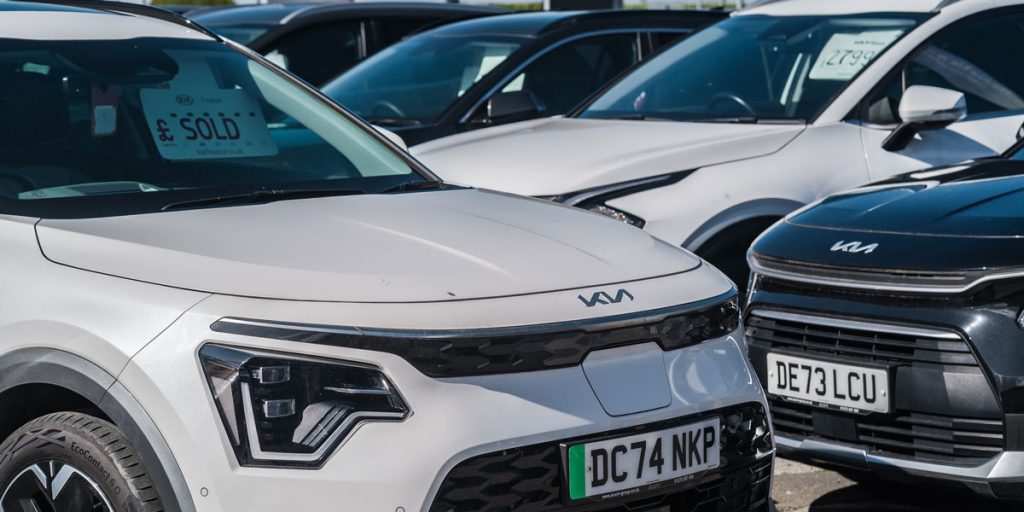

The headline reflects recent research by Motability. While some people find the idea of switching to an Electric Vehicle (EV) difficult, all the evidence points to growing demand for EVs. In the used car market, demand has been outpacing supply, and the value of used EVs has been rising.
Behind this year’s growth in demand for EVs is the low running costs, and in the used car market, the reality that the purchase price of an EV is comparable to that of a petrol or diesel equivalent.
When it comes to running costs, the ongoing geopolitical situation in the Middle East and its impact on fuel prices are having a significant effect. After hopes of peace saw fuel prices fall slightly, they have since risen significantly; unleaded petrol is back over 161p per litre, while diesel has risen to a little over 181p per litre.
While the energy price cap rose by 13% from July to September, meaning electricity prices increased, unless you had a fixed-rate tariff, for many drivers with a home charger, especially regular commuters who can take advantage of low-rate electricity tariffs, it can be considerably cheaper to run an electric vehicle than a petrol or diesel equivalent.
| Fuel / charging type | Typical cost per mile |
| Petrol car – based on 160p per litre | 14-16p per mile |
| EV – home charging, off-peak tariff | 2.5-3.5p per mile |
| EV home charging, standard tariff | 8-10p per mile |
| EV – public standard charger | 15p per mile |
| EV – public ultra rapid public charger | 20-24p per mile |
Costs are indicative and vary by vehicle efficiency, tariff, and driving style – sources: RAC Fuel Watch, Zapmap Price Index figures
For those relying on public infrastructure, choosing the right networks, apps and subscriptions can make a meaningful difference to costs.
Running-cost savings can be significant for those able to charge at home, especially if they can take advantage of overnight low-cost tariffs. Little wonder that demand for used BEVs and hybrid cars has continued to rise. According to fresh data from vehicle valuation service Indicata in July, Battery Electric Vehicles (BEVs) accounted for around 8.9% of used-car transactions, compared with 7.45% of stock. In short, sales exceeded the supply share by almost 1.5%.
EVs have been the dominant growth story in used car sales; they are selling well and quickly. When it comes to defleet residual values, at the critical three-year defleet benchmark, they rose by an impressive 2% in June and by nearly 5% over the preceding 90 days.
Are range and range anxiety still issues?
With a typical daily commute of around 30 miles and EVs typically offering real-world ranges of 200–300 miles, range shouldn’t be an issue for most journeys.
Anecdotally, the fear seems to be declining, and this increased confidence is being driven by the experiences of family and friends who have made the switch.
The Remaining Barriers to Broader Adoption
Price is a factor for people whose budget leans towards an older (7+ years old) car because most EVs are typically under 5 years old. However, the main reason for resistance is limited experience of driving and owning an EV.
Battery longevity concerns have been cited as a barrier to buying used EVs. However, real-world data increasingly shows that EV batteries degrade slowly and predictably, and can be expected to last 15 to 20 years – often outlasting the vehicle’s useful life. This is comparable to internal combustion engines, whose performance and efficiency decline over time due to mechanical wear and carbon build-up, yet the car remains viable for many years.
The scale and availability of public charging points remain a concern for some people, and half of EV drivers use a public charger at least once a month. The UK’s public network reached 120,388 chargers at the end of April 2026 and continues to grow, with many of the new chargers being fast or ultra-fast points. Faster charging and intuitive app technology that helps drivers find chargers when needed have improved access. However, with more EVs on UK roads, investment in infrastructure will need to be sustained.
Addressing Lingering Concerns
Negative perceptions, rather than facts, often underpin lingering concerns about EVs. Globally, research shows that 91% to 96% of EV drivers would not switch back to petrol or diesel cars. Only 1-3% of current EV owners express a desire to return to internal combustion engines.
That is why the experience of trusted family and friends who have made the move to an EV is so powerful. Their real-world experiences are often the clincher.
For most people, buying an EV for the first time takes longer than buying a petrol or diesel car, which they are more familiar with. Online research, conversations with friends and family, and working with a dealer who can provide the necessary insights and reassurance are important.
A handy extra piece of knowledge is that, when it comes to reliability, EV warranty claims are typically low.
And one final concern that can now be challenged is the decline in EV values after they first hit the road. Clearly, the supply and choice of used EVs will only increase. While this year has seen values rise, there is a growing expectation that used values will settle into a ‘new normal’ as supply and demand reach a new equilibrium, as petrol and diesel cars have always done.