Who this applies to
This guide is primarily for employees who are provided with a company van or vehicle through their employer and may be subject to Benefit-in-Kind (BIK) tax. It also includes some information relevant to self-employed individuals who use a van for business purposes.
When a vehicle is provided through your employer–typically via a company car or van scheme–it may be subject to Benefit-in-Kind (BIK) tax. This is a tax on non-cash benefits, such as the private use of a company vehicle. The rules and costs can vary significantly depending on whether the vehicle is classified as a van or a car.
The tax treatment for vans is very different from that for passenger cars. This distinction became particularly important following a change in April 2025, when double-cab pick-ups were reclassified as cars rather than vans. This change has significant implications for both BIK taxation for drivers and capital allowance relief for businesses.
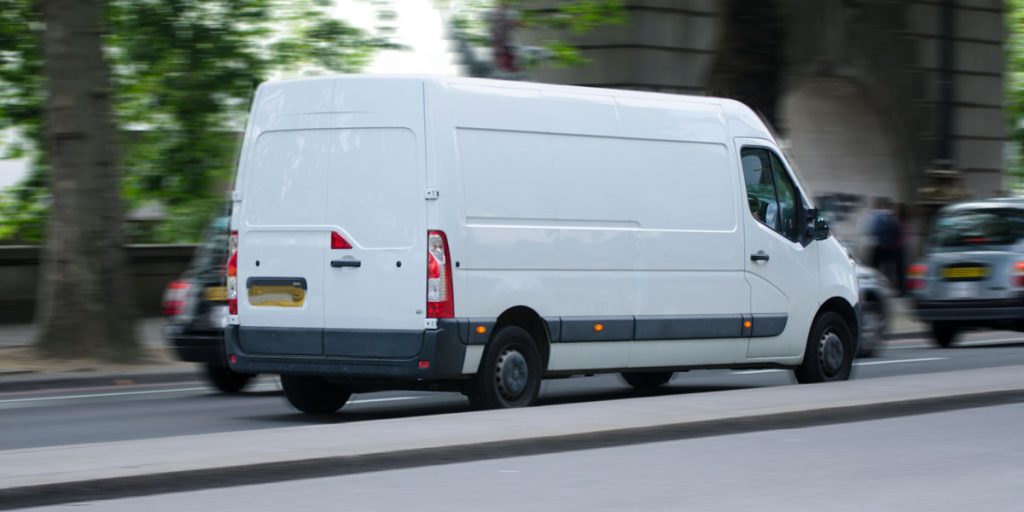
HMRC defines a van as a goods vehicle primarily designed to carry goods rather than passengers, with a gross vehicle weight of under 3,500kg when fully laden. It is this definition that led to the reclassification of many double-cab pick-ups.
To determine how a vehicle is classified for tax purposes, you can check the V5C registration document. If the vehicle is listed as N1 or N2, it is treated as a van. If it is classified as M1 or M2, it is considered a passenger or dual-purpose vehicle and taxed as a car.
BIK Tax (Employer-Provided Vehicles)
If you use a company van for personal journeys (beyond commuting), you may be liable for BIK tax.
For internal combustion engine (ICE) vans, the BIK rate is set at a flat £4,020 for the 2025/26 tax year. This is not the amount you pay directly; your actual cost depends on your income tax band:
- A 20% taxpayer would pay £804 per year (approximately £67 per month)
- A 40% taxpayer would pay £1,608 per year (approximately £134 per month)
If your employer also provides fuel for private use (for example, via a fuel card), an additional fuel benefit charge will apply.
BIK Tax and Electric Vans
Electric vans are currently highly tax-efficient for company use. The BIK rate is £0, meaning there is no tax charge for private use. In addition, if your employer covers the cost of charging, there is no associated fuel benefit charge.
BIK Tax and Plug-in Hybrid Vans
There are currently no additional tax incentives for plug-in hybrid vans. They are taxed in the same way as ICE vans for BIK purposes.
Vehicle Excise Duty (VED)
Van road tax is charged at a flat annual rate of £345 for the 2025/26 tax year. This applies to petrol, diesel, electric, and plug-in hybrid vans alike.
This can be paid as a single annual payment or in 12 monthly instalments, totalling £362.25 for the year.
Some variations may apply to older Euro 4 and Euro 5 vans.
Although double-cab pick-ups with a payload of over one tonne were reclassified as company cars for BIK tax and capital allowances from April 2025, they may still be treated as vans for VED purposes.
As with BIK classification, the V5C registration document can be used to confirm a vehicle’s VED status:
- N1 or N2 classification: taxed as a van
- M1 or M2 classification: taxed as a car
Self-Employed Status and Van Tax
If you are self-employed and own your van, BIK tax does not apply–even if you use the vehicle for personal journeys. BIK is only relevant to vehicles provided by an employer.
Instead, HMRC allows self-employed individuals to claim allowable business expenses, including:
- Vehicle insurance
- Repairs and servicing
- Fuel
- Parking
- Hire charges
- Vehicle licence fees
- Breakdown cover
However, you cannot claim for:
- Fines (e.g. parking or driving offences)
- Commuting costs
- Personal or non-business travel
HMRC also provides a helpful video overview: https://www.youtube.com/watch?v=f6oOb2zrah4